


Antwerpen - Het Steen
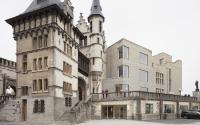
Realization
 Realisatie Open Oproep 3101 © Michiel De Cleene
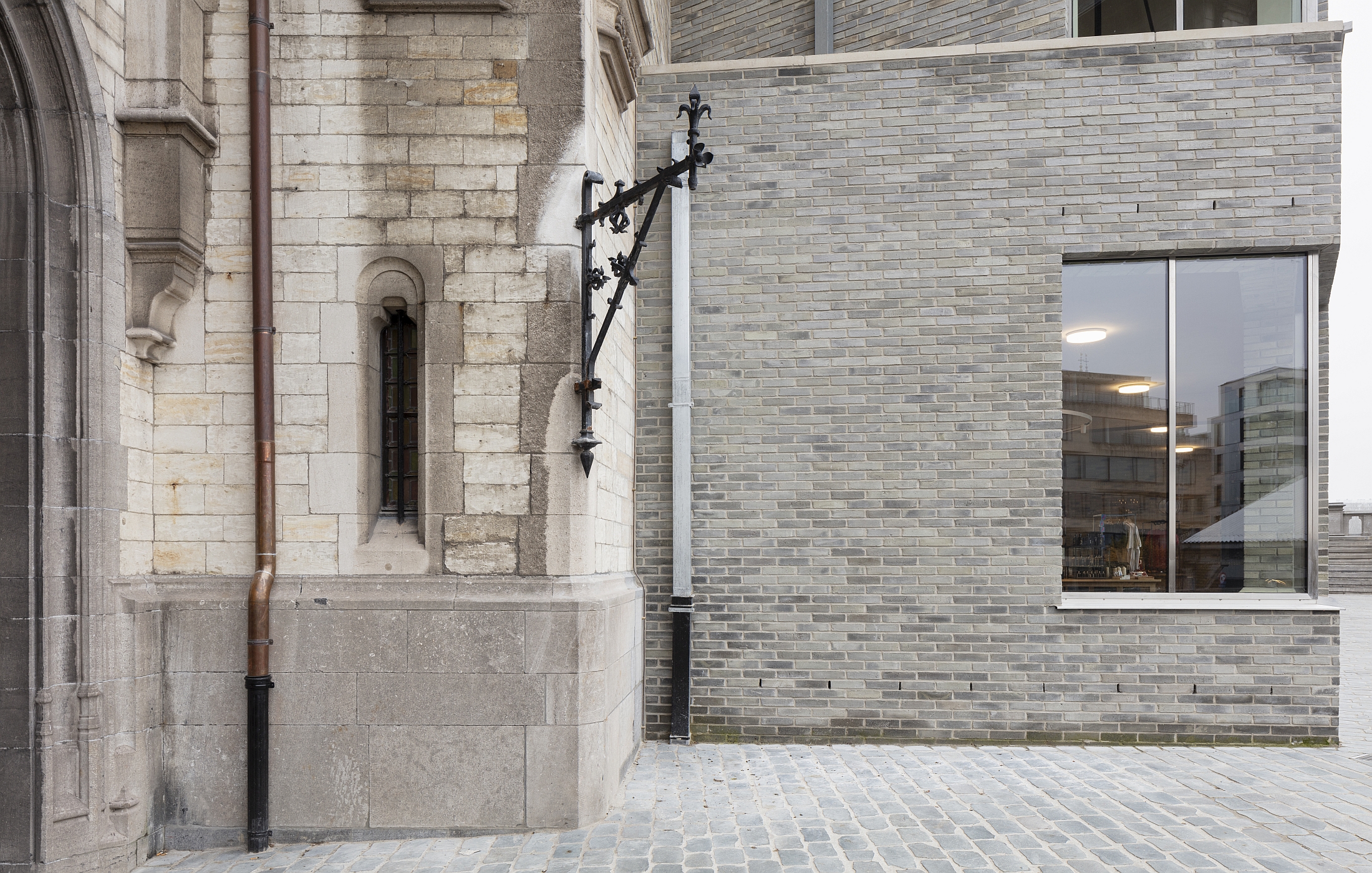 Realisatie Open Oproep 3101 © Michiel De Cleene
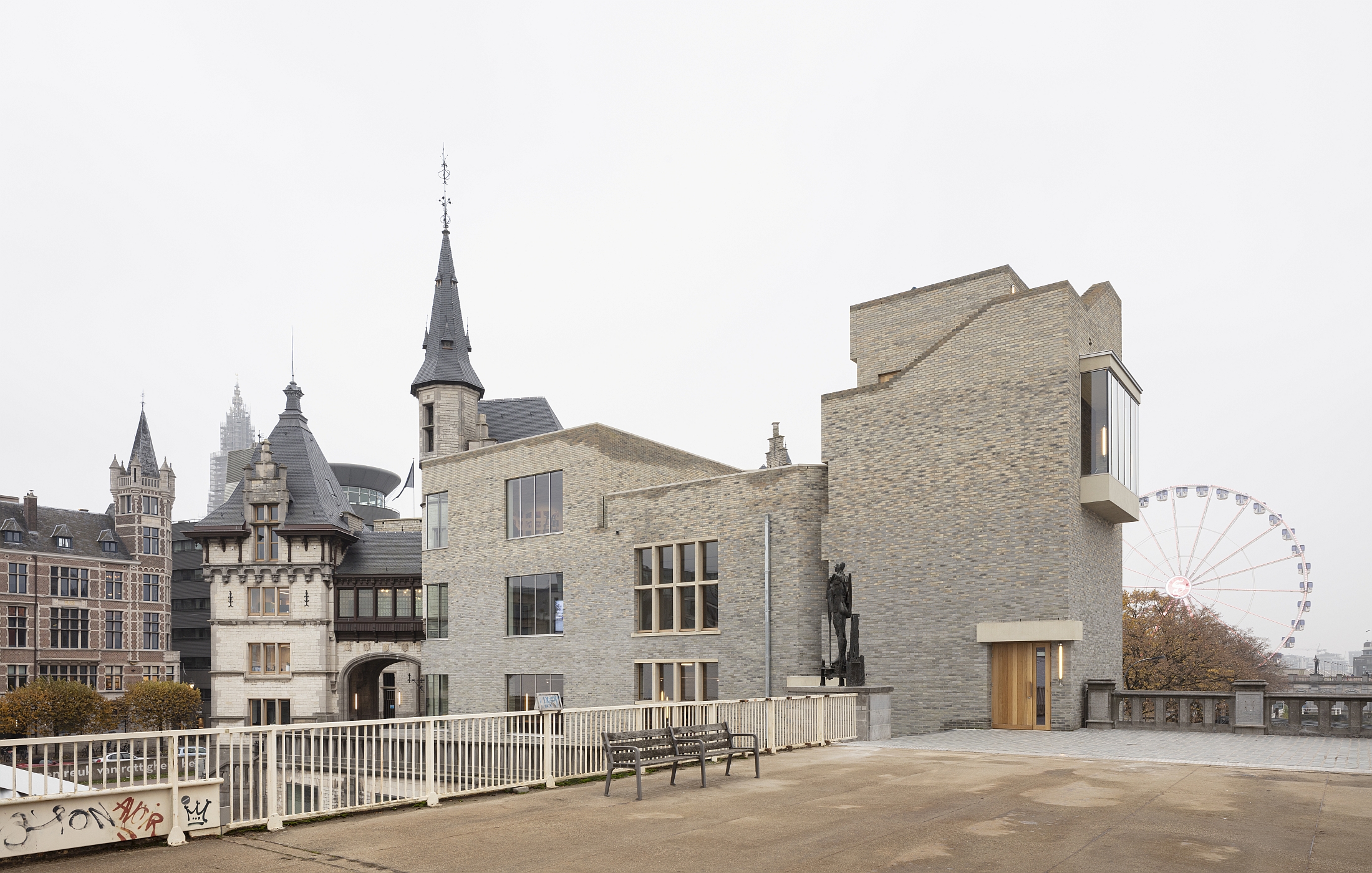 Realisatie Open Oproep 3101 © Michiel De Cleene
 Realisatie Open Oproep 3101 © Michiel De Cleene
 Realisatie Open Oproep 3101 © Michiel De Cleene
 Realisatie Open Oproep 3101 © Michiel De Cleene
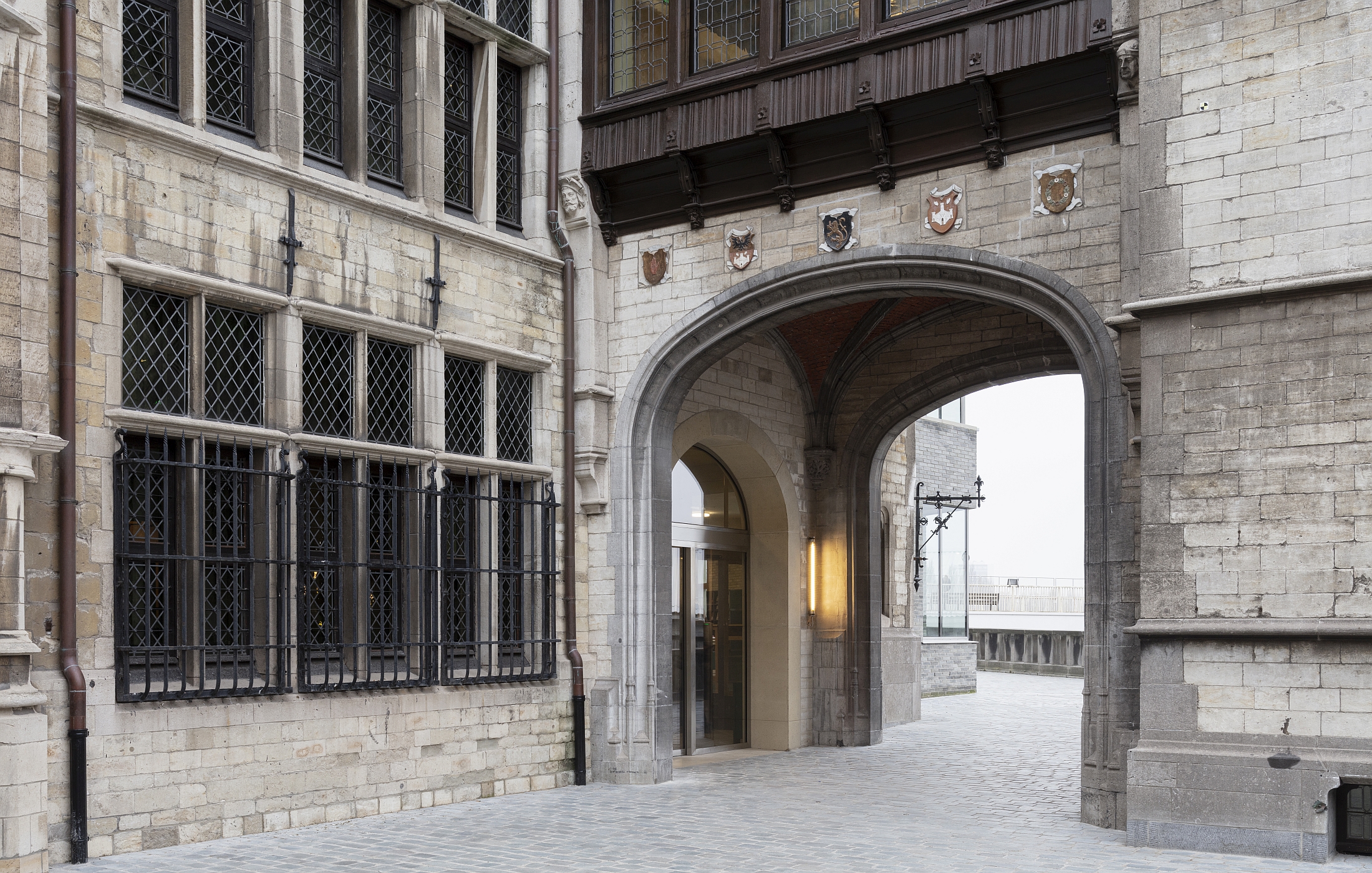 Realisatie Open Oproep 3101 © Michiel De Cleene
 Realisatie Open Oproep 3101 © Michiel De Cleene

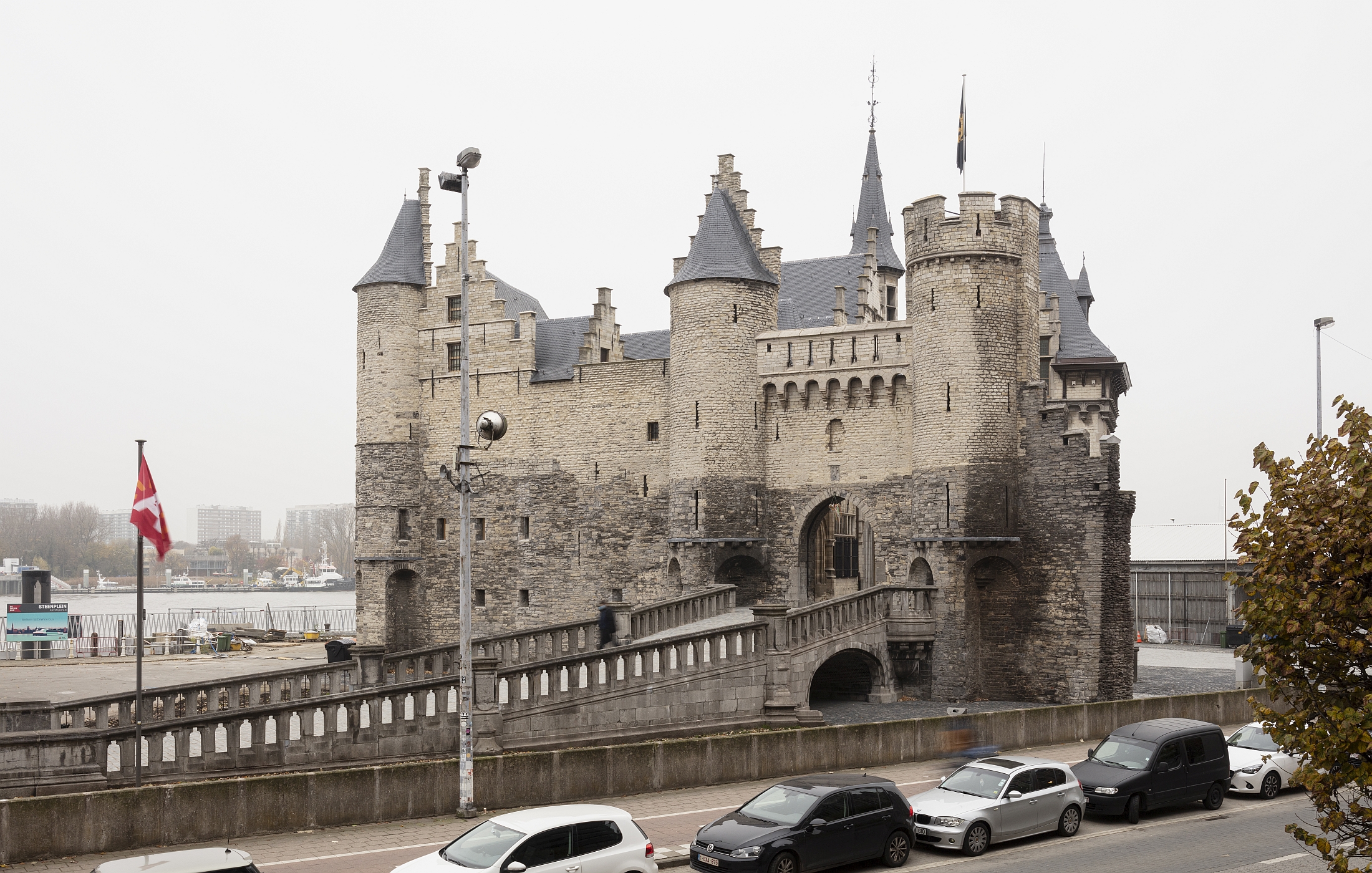
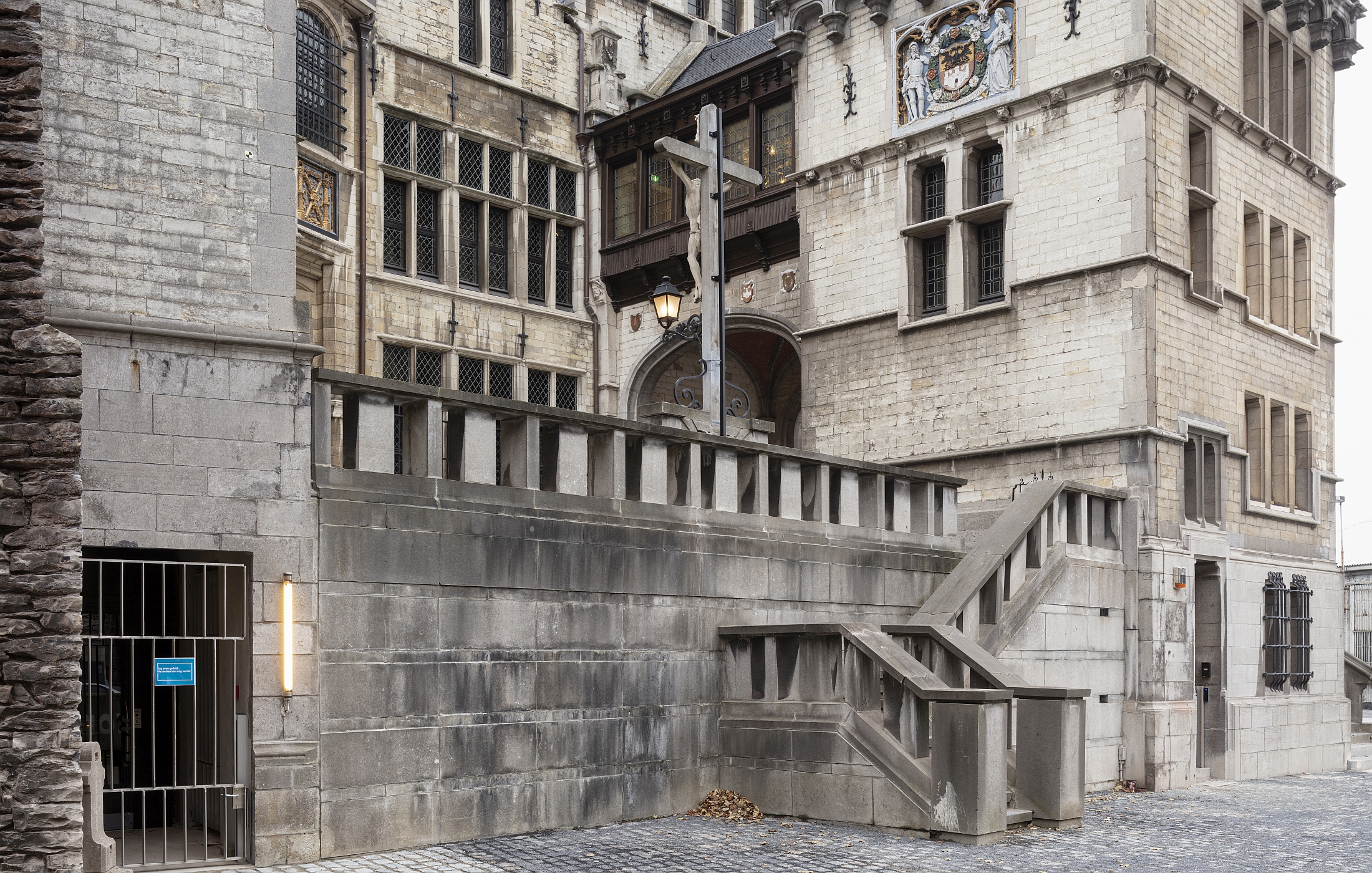


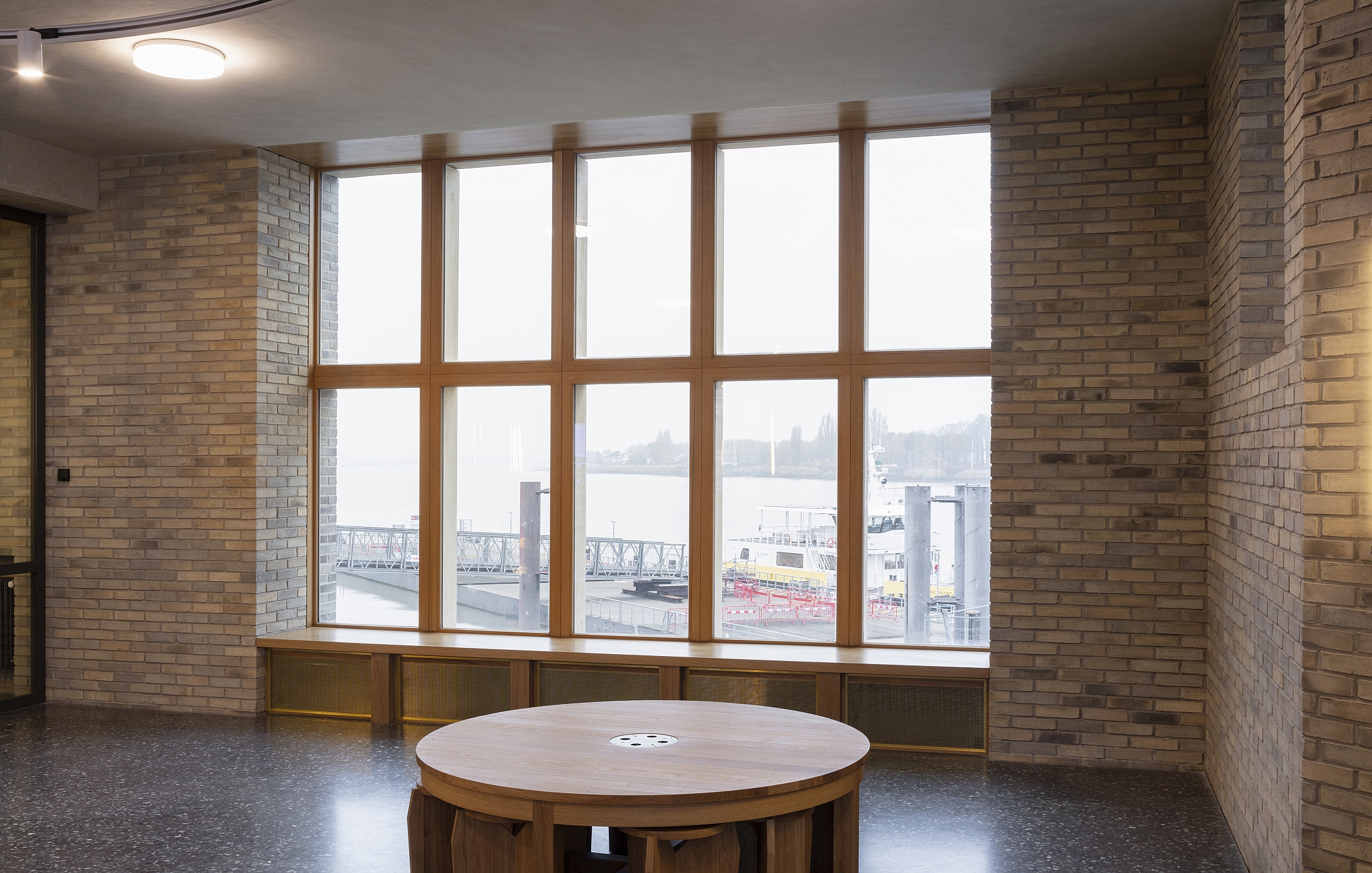


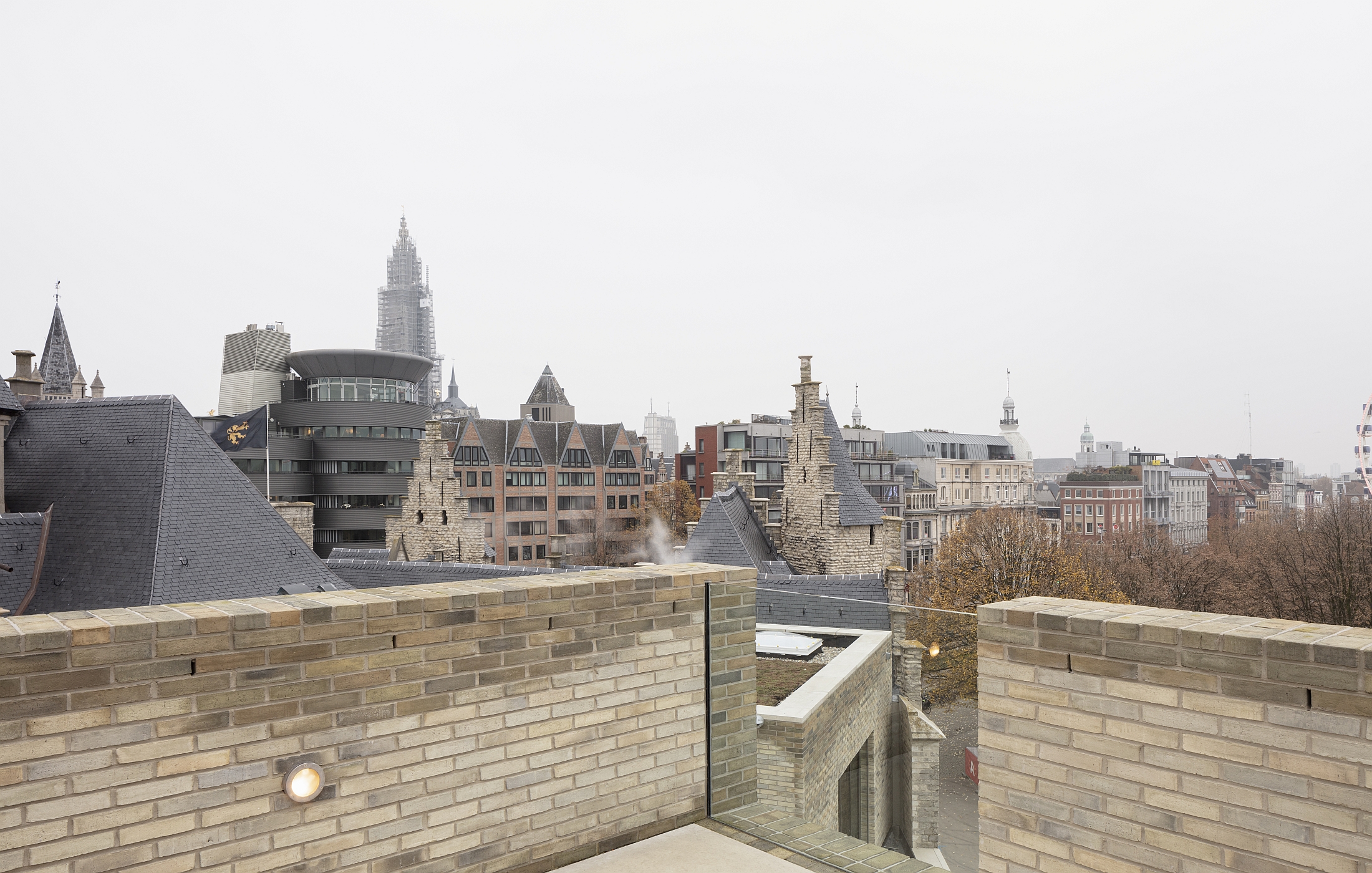
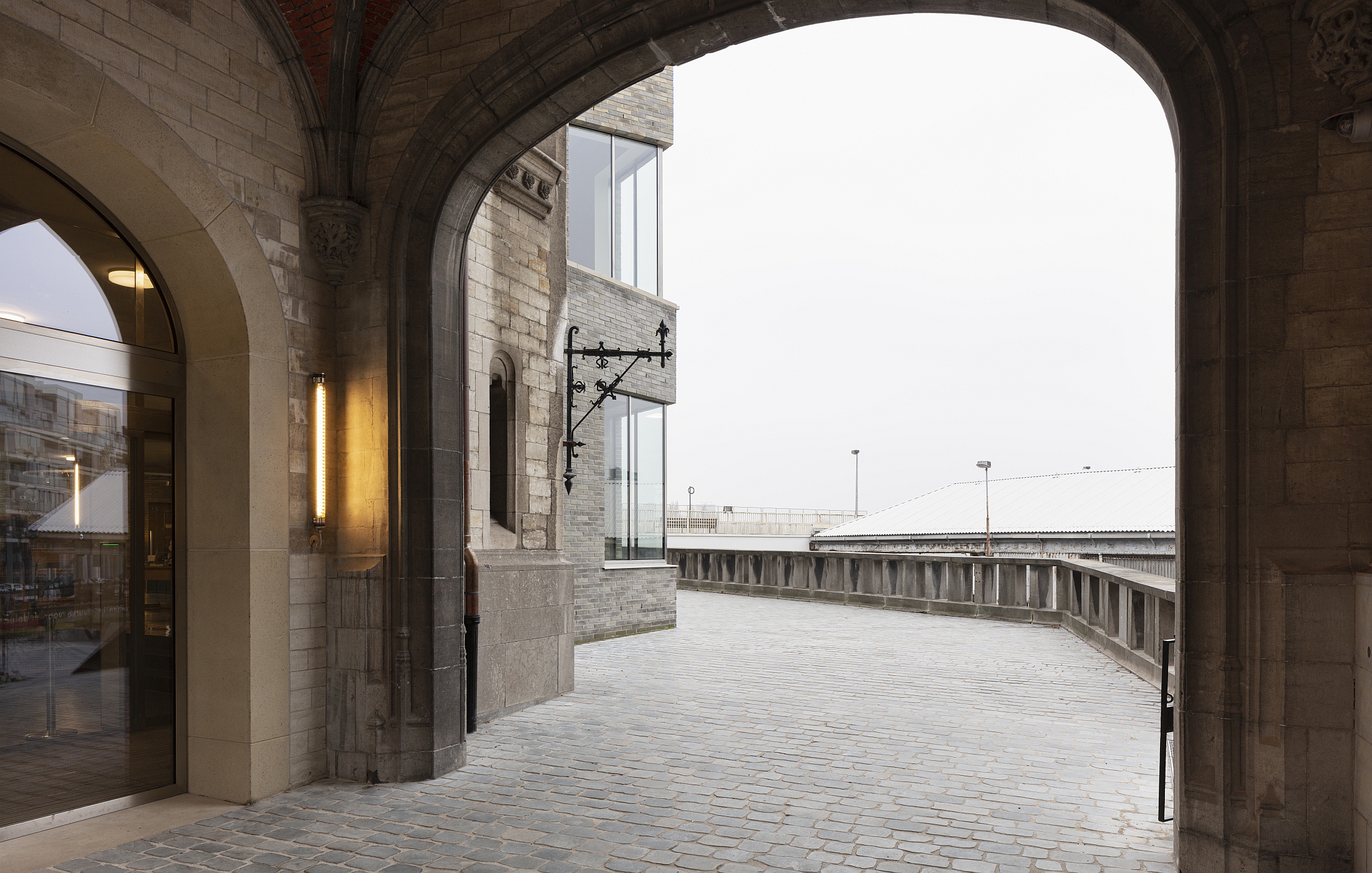
Pieter T’ Jonck wrote an article about the Stone for A+. It covered its history, design research and realisation by noA architects:
Some buildings have been there for so long that no one still realises how they ever got there. For example, few people know how the Steen in Antwerp once stood alone among the port hangars. Only when noAarchitecten converted the castle into a visitor centre for the city and a cruise terminal did it seem to dawn on many Antwerpers that the city would not be ‘t Stad without that castle. A storm of protest erupted. Yet noA merely wrote on to a long history of renovations. Meanwhile, the protest has long since subsided. The building is even on its way to becoming a popular rendezvous for city walks.
The conversion of the Stone was the subject of an Open Call in 2016. Many proposals then struggled with how to fit the new programme into the historically highly stratified monument. After all, the Stone was not created all at once. The oldest part dates from the 8th century, as a fortification next to a gate in the city walls. This still forms the basis of the southern and western façade of the Steen. Later, those walls were raised higher in a lighter natural stone. In the 16th century, house ‘De Mol’ was added to the castle. By then, the city had grown so much that the city walls were demolished and the castle changed into a prison, and even later a sawmill and residential barracks.
However, the 19th century revalued this stone stand-in-the-road as a witness to a glorious past. A restoration around 1860 restored it to a fictional image of what the castle might once have looked like. A Museum of Antiquities was given shelter there. This appreciation came just in time, because in 1877 the Scheldt quays were straightened for port activity. The area around the castle was then razed to the ground. Suddenly the castle stood isolated in the port area, like an odd duck in the middle of hangars. These on either side of the Steen broke the link between the city and the stream that brought it prosperity. That was wrong. That is why the city built walking terraces on top of the hangars on the waterfront. But even for those terraces, the Steen stood in the way.
Architect Ferdinand Truyman came up with an elegant solution in 1883 to connect North and South terraces while expanding the museum. Along ‘De Mol’, he added a wing to the Steen in a historicising style. From the old entrance gate, he had a ramp with a wide curve run uphill, under the new wing, to connect with the North Terrace. The South Terrace, a few hundred metres upstream, received a similar ramp. The space between those two ramps was named ‘Steenplein’. The new wing of the Steen got a jaunty, pseudo-medieval tower called the ‘Book Tower’.
Truyman thus mediated between progress and tradition in typical 19th-century fashion. After all, an idea of urban beauty that heralded 20th-century tourism wriggled into the project of historic preservation. After all, aren’t that restored castle and the terrace overlooking the river a perfect tourist infrastructure? Alas: the 20th century developed such an aversion to 19th-century architecture that part of Truyman’s wing had to make way for an unimaginative pseudo-Renaissance building, the Maritime Museum, in the 1950s. Only the book tower and a section of wall remained. The unity of the complex was thus far lost.
That configuration confronted the designers of the Open Call with many dilemmas. What to keep of the 1950s wing? What about that book tower, as part of the ‘Monument’? How to integrate terminal technology into old walls? Moreover, the Steen is located right in the new Kaaien storm surge barrier. That too was a boundary condition of importance.
Three teams - Bogdan & Van Broeck - aNNo, Kempe Thill - Meer and Maat-Werk - Van Belle & Medina - solved the problem of the terminal by accommodating it partly or wholly outside the building, in the, also protected, hangars. The Callebaut - FVWW team also resorted to an admittedly modest extension. Equally diverse was the approach to the 1950s wing. While the teams of Bogdan & Van Broeck - aNNo, Kempe Thill - Meer, and Callebaut - FVWW retained the structure, albeit with sometimes drastic interventions, noA and Maat-Werk - Van Belle & Medina cut away that part. In its place, they both provided a new volume in brick that further wrote to the palimpsest that is the building.
NoA’s proposal stood out in this respect, if only because it made almost no statements about the Stone’s spacious surroundings, whereas that seemed to be the real stakes of the design at Bogdan & Van Broeck - aNNo, for instance. This was not because they had no opinion on this, but precisely because they wholeheartedly endorsed the 19th-century layout of terraces and castle as a significant historical layer. They confirmed that the castle, since it became isolated, had also broken away from its obvious, tradition-determined, relationship to the city to become a symbol of the city’s ‘past’ and thus also part of its ‘experience’.
NoA thus retained everything from that period, but cut away the 1950s volume between ramp, wall of the book tower and buildings from the 16th century. In the resulting gap, they placed a new three- to four-storey structure with almost the same footprint. A smart and pragmatic solution, because this way the design at quay level automatically embraces the halls under the ramp for the terminal. While the new walls remain closed for flood defence reasons, daylight still enters along those halls and the stairs to the higher floors. Without complicated extensions, the design thus creates space for a cruise terminal at quayside level. A luxurious staircase along the foundations of the vanished city walls leads from there directly to the visitor centre at the level of the Noorderterras, and then further to the consumption area on the second floor and the experience trail in the oldest parts of the building. All parts of the programme thus connect naturally with each other, the quay and the Noorderterras…
Award
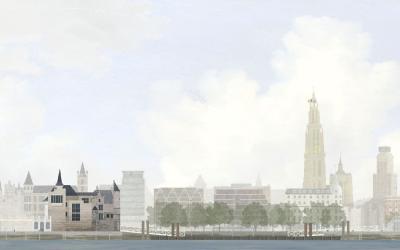
noAarchitecten
Download design proposal

The Stone once again shows itself from all sides
The Standard, 25.11.2016
By Geert Sels
Noa Architecten is expanding Het Steen in Antwerp with a tower along the Scheldekaai. The contemporary castle will become a tourist reception centre.
Despite its historical importance, Het Steen in Antwerp has somewhat faded away. It only shows itself from one side. Which is just as well, because the 1950s annex does not have much going for it. The building is now undergoing a major renovation and extension. For this intervention, the Flemish Government Architect launched an Open Call. 31 architectural firms competed for the assignment. For a while it became precarious, because the five finalists also included the office of recently appointed Flemish Government Architect Leo Van Broeck. In the end, the contract went to Noa Architecten. The budget is budgeted at €9 million. The city will apply for subsidies for heritage restorations and from Tourism Flanders for this. The works will start in early 2018 and will last two years. The Stone actually consists of many different stones. The oldest date back to the 11th century and are related to the origins of the city. Afterwards, building layers were added each time: from the 16th and 19th centuries, and a rear building from the 1950s.
‘Actually, Het Steen is a concentrate of different structures from the historical ramparts,’ says Philippe Vierin of Noa Architects. ‘In 1885, they were brought together into one apparent whole in accordance with the romantic vision of the time.’ Noa Architects continues on that vision. The rear building will be demolished, giving the waterfront along the Scheldt a dynamic function once again. The new building of 1,800 square metres is slightly more than double the old section.
‘In our plan, Het Steen becomes a single entity that can be seen from all sides,’ says Jitse van den Berg of Noa. ‘You can read the layers of time on the stones of the old walls. We will incorporate these colour shades in the new facades. Artist Pieter Vermeersch will make a design for that.’ Furthermore, the office plays with the form language of the castle. There will be a tower, and a modern equivalent of battlements and defence holes. At the top, there will be an observation post accessible to visitors. Along the Scheldt quay there will be a large hall where cruise passengers can embark. The space for five hundred people can also be used for events. There will also be an info zone, a city shop and a rest area with a view of the Scheldt. Tourists will find an experience trail with the city’s history and highlights. Afterwards, they can go into the city via carriages, boats and bicycles.
Selection
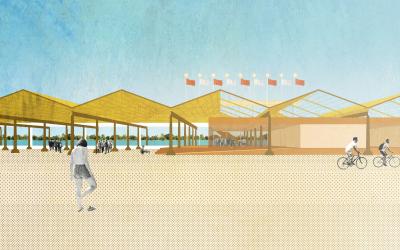
aNNo architecten, BOGDAN & VAN BROECK ARCHITECTS
Download design proposal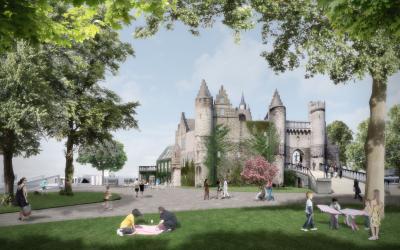
Atelier Kempe Thill architects and planners, Team van Meer! architecten & co
Download design proposal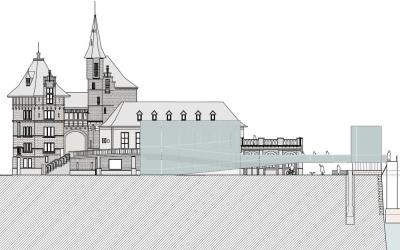
CALLEBAUT ARCHITECTEN, Frederic Vandoninck Wouter Willems architecten
Download design proposal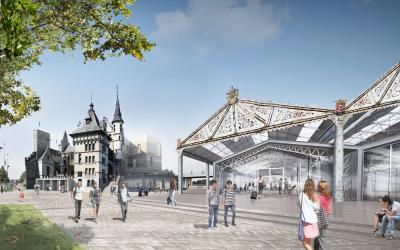
MAAT_WERK architecten, Van Belle & Medina architects
Download design proposalProject description
 OO3101_luchtfoto ©GDI-Vlaanderen
 OO3101 Antwerpen Het Steen ©Michiel De Cleene
 OO3101 Antwerpen Het Steen ©Michiel De Cleene
 OO3101 Antwerpen Het Steen ©Michiel De Cleene
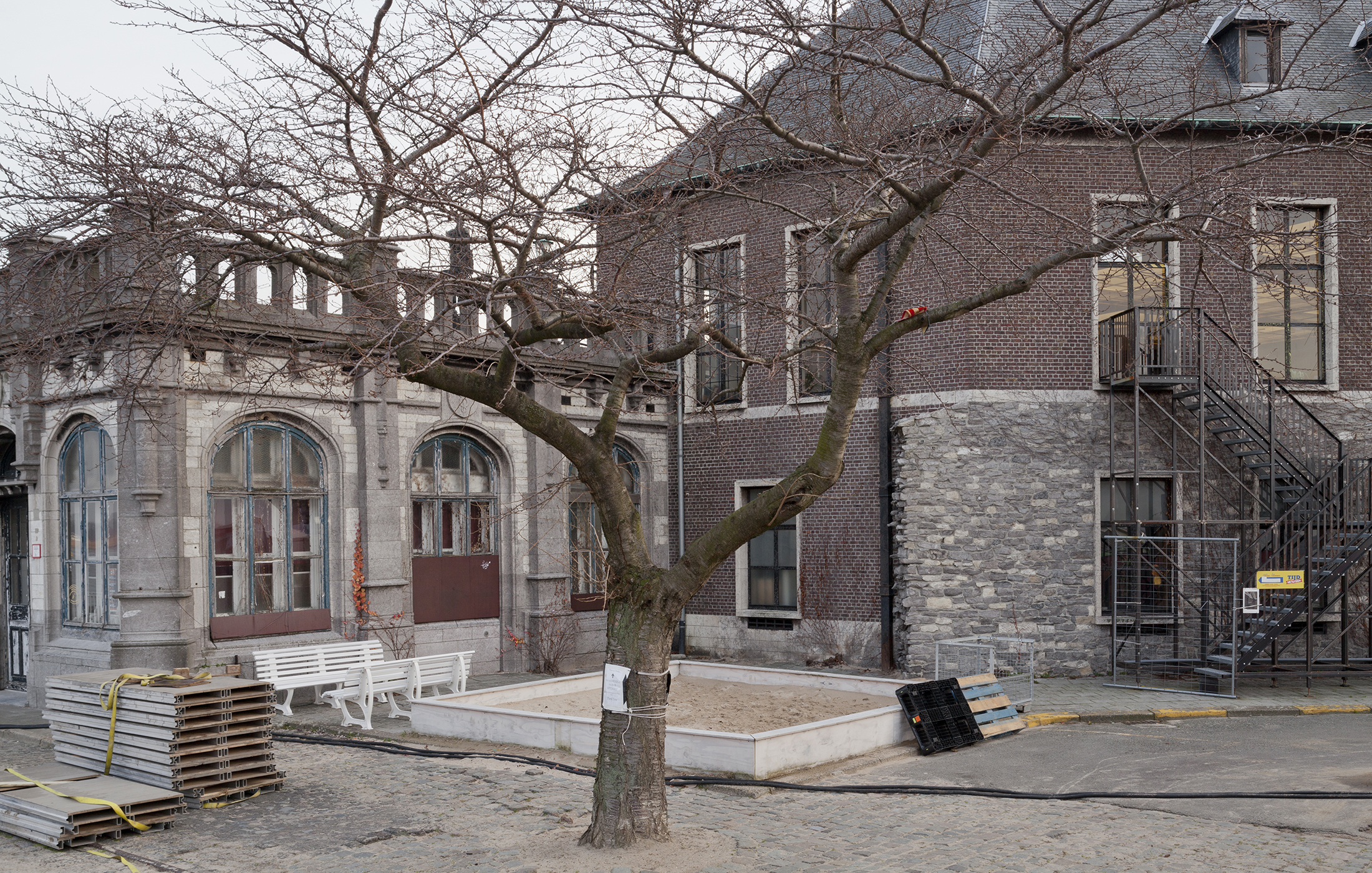 OO3101 Antwerpen Het Steen ©Michiel De Cleene
 OO3101 Antwerpen Het Steen ©Michiel De Cleene
 OO3101 Antwerpen Het Steen ©Michiel De Cleene
 OO3101 Antwerpen Het Steen ©Michiel De Cleene
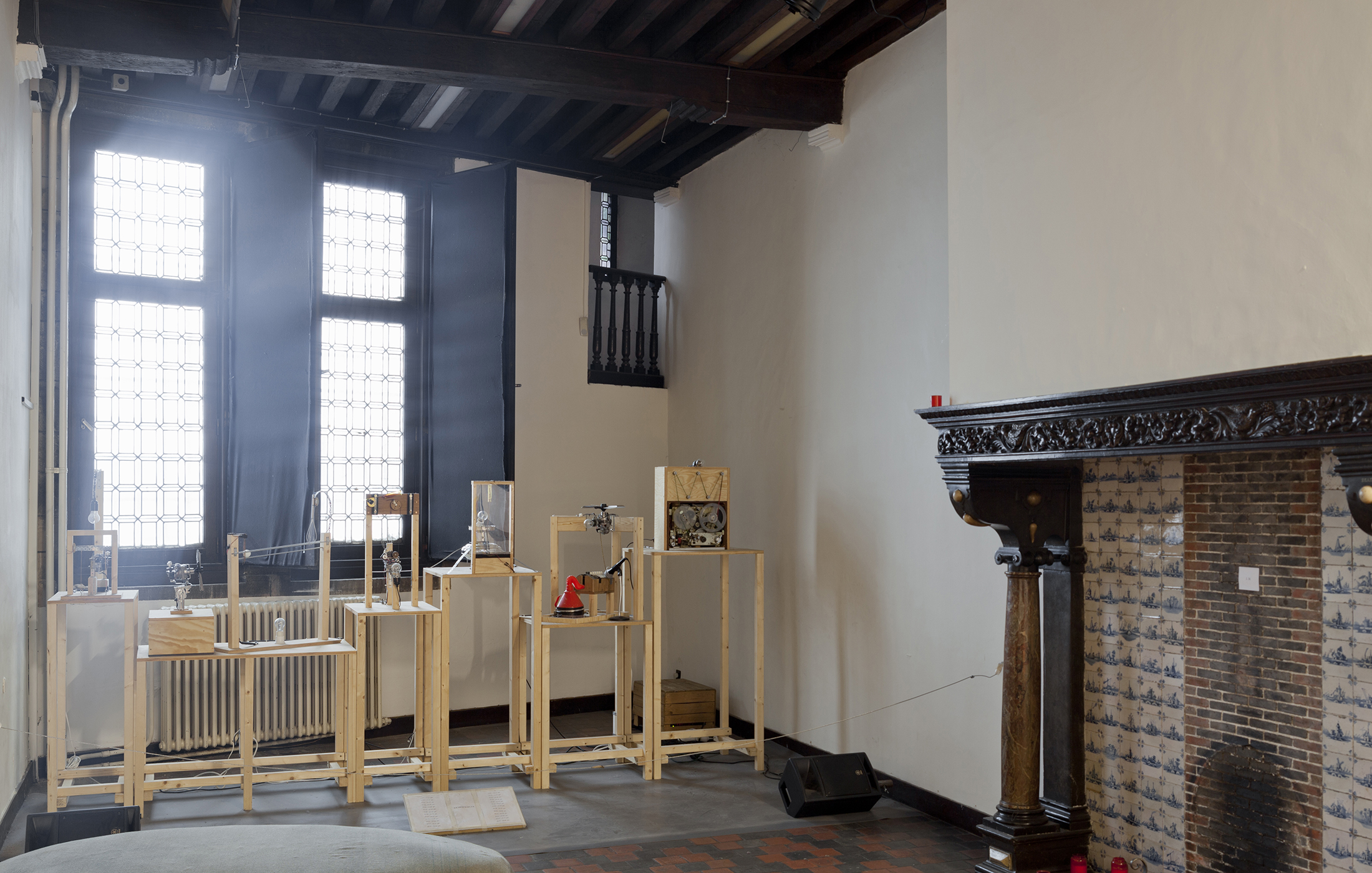


Project in the framework of the Immovable Heritage Order, read the remark below
The management plan is not part of the assignement. The management plan is made by the client and based on the archaeological survey.
On 6th February 1936, ‘Het Steen’ was classified as a protected monument because of its artistic, historical and archaeological value and it is one of the most important architectural relics in Flanders. It is an iconic building that has great significance as the ‘keystone’ of the city’s rich past. ‘Het Steen’ is intimately linked with the origins of the city; it is the last clearly visible evidence of the walled fortress that defined the appearance of the city for centuries. ‘Het Steen’ has undergone a number of transformations together with the whole Antwerp waterfront. It is a complex in which one can read various stages of building and use and in which a range of elements define its heritage value.
‘Het Steen’ also has an important function as a landmark. In the Master-Plan for the Scheldt Quays, ‘Het Steen’ will find itself on the land side of the dike and its relationship with the city will be strengthened. The intention is also to improve access to ‘Het Steen’ and Steenplein so that the whole site becomes an inseparable part of the historical city centre.
In the course of its rich history, the building has been restored several times and adapted to new uses. Sections from the 11th and 12th centuries, and the 16th century, and additions from the end of the 19th and mid-20th centuries, are all closely interwoven. Over the last few decades, changes to the use of the building and various small-scale alterations have been carried out on a rather ad hoc basis, without an overall plan for the whole and with no attention paid to the intrinsic worth of the monument. As a result, it is a monument with a substantial maintenance backlog that has no permanent function.
The aim of this project is to incorporate this heritage building in a sustainable and creative way into a new development whose goal is to achieve added spatial and tourism value for the city. The re-use of ‘Het Steen’ and making it functional once again should contribute to the preservation and upgrading of this monument and to an increase in public access.
‘Het Steen’ is scheduled to become a tourist reception and visitor centre, offering an introduction to Antwerp that is intended to start visitors off on their further exploration of the city.
Antwerp City Council wants to create a reception centre that combines a number of requirements, such as the provision of information, with visitor experiences (ticketing, booking, catering, exhibitions etc.) in a narrative related to the historical city centre. This is also to be combined with reception rooms for groups, tourism professionals and the press, as well as a cafeteria, a shop and offices for staff.
‘Het Steen’ will in future also be the starting point for tours by carriage, bicycle, boat etc., where visitors not only arrive from cruises and from the city itself, but will also be able to depart on a trip to discover the city.
In this way, ‘Het Steen’ and its immediate surroundings will form the perfect reception point for the story that Antwerp has to offer and will thereby address a broad target group.
Antwerp City Council wants to develop the site into an ambitious reception centre that forms a contemporary spatial response and at the same time is able to make sustainable and high-quality use of this valuable architectural and art history heritage. It is looking for an interdisciplinary design team that is capable of formulating an integrated vision for a heritage-based development of ‘Het Steen’.
The possibilities and opportunities for development are to be examined on the basis of the building history study and the culture history valuation provided. The principal counts on receiving a well-considered proposal from the designer, one that takes account of the character of the site and the appeal of the whole complex in its new function.
The relationship with the Scheldt quays, the immediate surroundings and the integration of the dike are also viewed as essential preconditions of the design.
One of the more important design tasks is the endeavour to create an open site with optimal accessibility and a low threshold. Another condition is that a low-energy and low-maintenance approach be taken to the whole complex. The possibility of modifying the heritage site will have to be examined on the basis of the abovementioned elements.
Candidates should in their submissions demonstrate expertise suited to this exceptional heritage project on the basis of at least those points regarding quality set down in article 11.5.2 of the Immovable Heritage Act of 16 May 2014.
In the course of the Open Call, a draft design with accompanying vision statement for the complete assignment will be requested, and the building history study will be made available.
Projects in the framework of the Immovable Heritage Order
Local authorities that want to restore a classified monument and apply for a restoration grant from the Flemish Authorities to achieve this must comply with the Flemish Government Order regarding the implementation of the Immovable Heritage Order of 12 July 2013.
The Open Call projects that involve the restoration of a classified monument must therefore also comply with the stipulations of this legislation. This means that for these projects a designer must be appointed in accordance with a modified Open Call procedure.
In the first place this means that the following criteria are to be used in the selection of the candidates:
a) they must have the relevant studies and professional qualifications
b) they must also have general expertise relevant to the specific project assignment
c) a statement must be made of the least part of the assignment that the designer or contractor will carry out under his own control
The design assignment for drawing up management plans, the preparatory studies, and the management measures, work on or services for classified property and heritage sites are allocated on the basis of at least the following criteria:
1) submission of a concept document with a description of the approach and method for the assignment
2) a statement of the approach to sustainability
3) a statement of the services that will be provided for the fee paid
4) a proposal for site inspection (if applicable)
There is the possibility of adding extra criteria, but they must be no more than supplementary in nature and may in no circumstances take precedence over the abovementioned criteria. This means that the abovementioned criteria will always take priority over any additional criteria and must consequently always be the first three allocation criteria in the specifications.
Note: in their portfolio, applicants must prove their expertise in this sort of special heritage project on the basis at the very least of the elements concerning quality in article 11.5.2 of the Immovable Heritage Order of 16 May 2014.
Project details
Project code
OO3101
Official name
All-inclusive design brief for the development of ‘Het Steen’ into a tourist reception and visitor centre
This project is part of the project bundle OO31.
Status
Realized
Client
Stadsbestuur Antwerpen
Site location
Steenplein 1
2000 Antwerpen
Belgium
Timing project
- Selection meeting:
Contact Team Vlaams Bouwmeester
Christa Dewachter
Award procedure
Design contest followed by a negotiated procedure without publication of a contract notice
Financial
Construction budget
Including VAT
Excluding commission
Commission
Fee for offers
Project type
Function
Domain
European publication
- Date European publication:
- Number European publication: 2016/S 032-052174
Publication bulletin
- Date publication bulletin:
- Number publication bulletin: 2016-500507
This project was realized via Open Call. Read more about this tool.
Last reviewed on: .